
 Ekani Ella
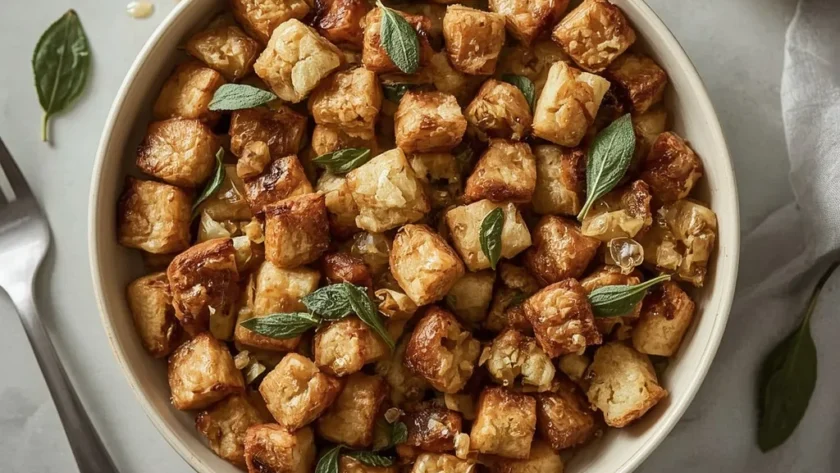
 Gordon Ramsay Chestnut and Sage Sourdough Stuffing turns stale bread, sweet roasted chestnuts, and fresh herbs into the kind of side dish people fight over at the holiday table. The top bakes up crisp and golden while the middle stays moist and deeply savory. It’s a vegetarian stuffing that doesn’t feel like a compromise.
Total time is 75 minutes — 25 minutes of prep and 50 minutes in the oven. It sits at an intermediate level, mostly because drying the bread properly matters more than any fancy technique. Make it for Christmas dinner, Thanksgiving, or any Sunday roast that deserves a proper side. The one step worth slowing down for is letting the bread soak before baking.
What is Gordon Ramsay Chestnut and Sage Sourdough Stuffing?
It’s a baked bread stuffing built on cubed sourdough, cooked onion, celery, garlic, sage, thyme, and chopped chestnuts, all bound with vegetable stock and egg. The texture lands somewhere between a savory bread pudding and a classic holiday dressing — crisp on top, tender underneath. Earthy chestnuts and piney sage give it a distinctly British, cold-weather character. Serve it alongside any roast dinner where you’d normally reach for potatoes.
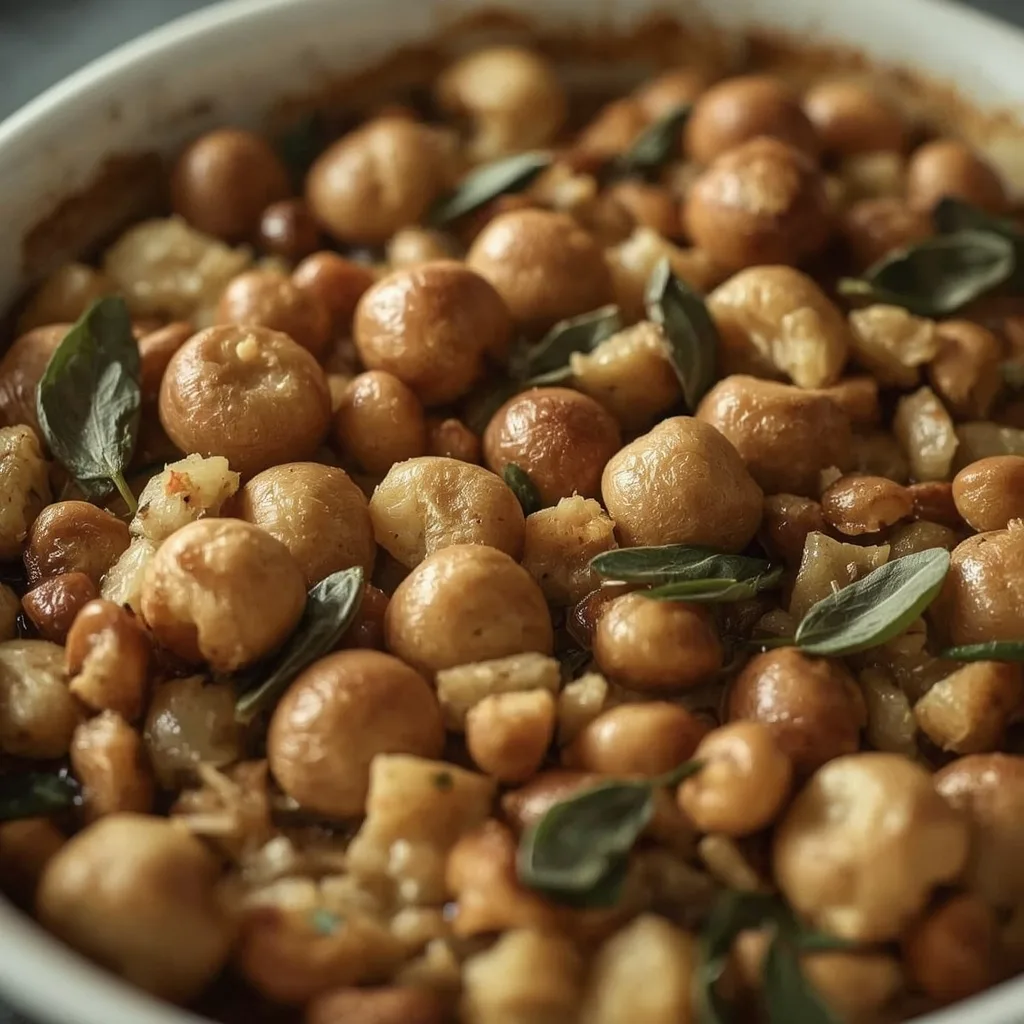
Reasons to Try Gordon Ramsay Chestnut and Sage Sourdough Stuffing
There are plenty of stuffing recipes out there. This one earns its spot on the table for a few specific reasons.
- No bacon, no alcohol — the flavor comes entirely from butter, herbs, and chestnuts, so it works for vegetarian guests without anyone feeling shortchanged.
- Sourdough holds its shape — the tangy, sturdy crumb absorbs stock without collapsing into mush the way soft sandwich bread does.
- Chestnuts bring natural sweetness — they add a soft, nutty texture that balances the savory onion and celery.
- Make-ahead friendly — you can assemble it a day in advance, which matters on a busy holiday cooking day.
- Feeds a crowd easily — a 9×13-inch dish serves four generously as a side, or more if the table is loaded with other dishes.
- Reheats well — leftovers stay good for days and re-crisp nicely in the oven.
Ingredients Needed to Make Gordon Ramsay Chestnut and Sage Sourdough Stuffing
You probably have a few of these already. The only item worth a special trip is the chestnuts, and they’re easy to find vacuum-sealed or in a jar during the colder months.
The Bread Base
- Sourdough bread — 1 lb (450g), cut into 1-inch cubes, about 8 cups. A sturdy, day-old loaf works best; fresh bread steams instead of drying.
The Aromatics and Herbs
- Unsalted butter — 4 tablespoons, plus extra for greasing. This is your main fat, so use a good one.
- Onion — 1 large, finely diced, about 1 cup. Yellow or white both work.
- Celery — 2 stalks, finely diced, about 3/4 cup. This adds the classic savory backbone.
- Garlic — 3 cloves, minced. Fresh is far better than the jarred stuff here.
- Fresh sage — 2 tablespoons, finely chopped. Dried sage is a weaker substitute, so use fresh if you can.
- Fresh thyme — 1 tablespoon, chopped. Strip the leaves off the stems first.
The Chestnuts and Binding
- Cooked peeled chestnuts — 7 oz (200g), roughly chopped. Vacuum-packed or jarred both work fine.
- Vegetable stock — 1 1/2 cups. Use a low-sodium brand so you control the salt.
- Egg — 1 large, lightly beaten. This holds everything together as it bakes.
- Kosher salt — 1 teaspoon.
- Black pepper — 1/2 teaspoon, freshly ground.
Equipment Needed
Nothing unusual here. Most of this is already in a standard kitchen.
- Baking sheet — for drying the bread cubes in a single layer; a rimmed one keeps crumbs contained.
- Large skillet — a wide pan gives the onion and celery room to soften without steaming.
- 9×13-inch baking dish — the size matters for even baking; a smaller dish makes the stuffing too deep and slow to crisp.
- Large mixing bowl — big enough to toss 8 cups of bread without spilling.
- Whisk — for blending the stock, egg, salt, and pepper smoothly.
Instructions to Prepare Gordon Ramsay Chestnut and Sage Sourdough Stuffing
The whole process comes down to drying, sautéing, and a two-stage bake. Follow the order and the texture takes care of itself.
- Dry the bread — preheat the oven to 300°F (150°C). Spread the cubes on a baking sheet in a single layer and bake for 10-12 minutes, until dried out but not browned. This step is what stops the stuffing from turning mushy.
- Raise the heat and prep the dish — increase the oven to 375°F (190°C) and grease a 9×13-inch baking dish with butter.
- Soften the vegetables — melt the 4 tablespoons of butter in a large skillet over medium heat. Add the onion and celery and cook, stirring occasionally, until softened and translucent, about 8 minutes. Keep the heat moderate; you want no browning.
- Bloom the herbs — add the garlic, sage, and thyme and cook for 1 minute, until fragrant. Stir in the chestnuts and cook another 2 minutes to warm through, then remove from heat.
- Combine bread and vegetables — in a large bowl, toss the dried bread cubes with the chestnut mixture until evenly distributed.
- Add the liquid — whisk the vegetable stock, beaten egg, salt, and pepper in a separate bowl. Pour over the bread and toss gently until every cube is moistened. Let it sit for 5 minutes to absorb.
- First bake, covered — transfer to the prepared dish, spread evenly, cover with foil, and bake for 25 minutes.
- Second bake, uncovered — remove the foil and bake another 20-25 minutes, until the top is golden brown and crisp. Let rest for 10 minutes before serving.
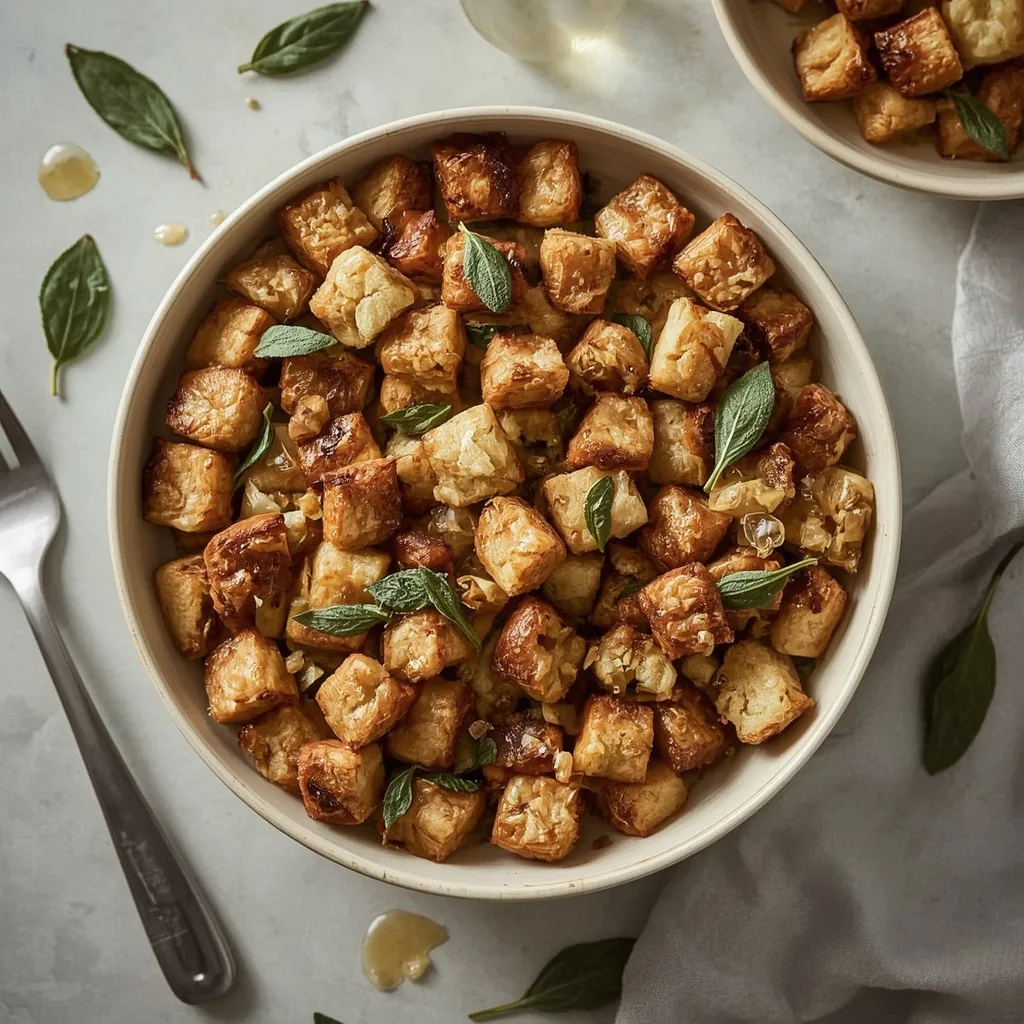
What Goes Well With Gordon Ramsay Chestnut and Sage Sourdough Stuffing Recipe
This side plays nicely with most roasts and holiday plates. Here’s what I’d put next to it.
- Roast chicken — a simple herb-roasted bird keeps the meal classic and lets the sage shine.
- Braised root vegetables — carrots, parsnips, and swede roast into sweet, caramelized bites that echo the chestnuts.
- Cranberry sauce — a spoonful of tartness cuts through the rich, buttery crumb.
- Mushroom gravy — earthy and vegetarian, it keeps the whole plate meat-free if that’s your goal.
- Green beans with almonds — fresh, crisp, and snappy, they add contrast to the soft interior of the stuffing.
- Sparkling apple cider — a festive, alcohol-free drink that matches the sweeter notes in the dish.
Key Tips for Making Gordon Ramsay Chestnut and Sage Sourdough Stuffing Recipe
Most of the trouble people run into comes down to moisture. These are the fixes.
- Dry the bread fully — if the cubes still feel soft in the center, give them a few more minutes. Under-dried bread turns gummy once the stock hits it.
- Don’t brown the aromatics — you want translucent onion and celery, not golden. Browned bits turn slightly bitter against the sweet chestnuts.
- Toss gently — overmixing crushes the bread into paste. Fold rather than stir once the liquid goes in.
- Respect the 5-minute soak — this lets the stock distribute evenly so you don’t get dry pockets and soggy patches.
- Spread it evenly — a level layer in the dish bakes at the same rate and crisps uniformly across the top.
- Watch the uncovered bake — the last 20-25 minutes is when the top transforms. Pull it early and it stays pale and soft.
- Rest before serving — 10 minutes lets the interior set so it slices and spoons cleanly.
Creative Variations of Gordon Ramsay Chestnut and Sage Sourdough Stuffing Recipe
Once you’ve made the base version, it’s easy to shift the flavor profile.
- Swap the bread — try a rustic country loaf or a seeded whole grain for a different crumb and a bit more texture.
- Add dried fruit — a handful of dried cranberries or chopped apricots brings a sweet-tart pop that pairs well with sage.
- Boost the nuts — toasted chopped walnuts or pecans sprinkled in add crunch and depth.
- Go mushroom-heavy — sauté 8 oz of chopped mushrooms with the onion for a deeper, earthier stuffing.
- Make it in a muffin tin — bake in greased cups for individual portions with extra crispy edges on every side.
- Skip the egg — for a looser, more rustic dressing, leave the egg out and add an extra splash of stock.
Storage Guidelines for Gordon Ramsay Chestnut and Sage Sourdough Stuffing Recipe
This keeps well, which is one of its best qualities during a busy holiday week.
- Refrigerator storage — cool completely, then store in an airtight container for up to 3 days.
- Freezing — wrap tightly in plastic wrap and foil, then freeze for up to 2 months.
- Thawing — move it to the refrigerator overnight before reheating; a slow thaw keeps the texture intact.
- Portioning ahead — divide into single-serve containers before freezing so you only reheat what you need.
- Room-temperature rule — never leave it out longer than two hours; dairy and egg in the mix don’t do well sitting warm.
Reheating Tips for Gordon Ramsay Chestnut and Sage Sourdough Stuffing Recipe
Reheating is where a good stuffing can go wrong. The goal is hot through the middle with a crisp top.
- Oven method — cover with foil and bake at 350°F (175°C) for 15-20 minutes, then uncover and bake 5 minutes to re-crisp the top.
- Microwave method — reheat covered in 30-second intervals until hot. Fast, but the top softens, so it’s best for single portions.
- Air fryer method — spread a portion in the basket and heat at 350°F (175°C) for 5-7 minutes, checking often for a quick crispy finish.
- Watch the edges — already-browned stuffing can scorch fast on a second bake, so check a few minutes early.
Nutrition Value (per serving)
Based on 4 servings total, here’s what one portion looks like.
- Calories — 430
- Protein — 10g
- Fat — 15g
- Carbohydrates — 65g
- Fiber — 5g
- Sugar — 7g
- Sodium — 710mg
Cholesterol and saturated fat will vary slightly depending on the butter and stock you use. These numbers are a solid guideline, not a lab measurement.
FAQs
Can I make Gordon Ramsay Chestnut and Sage Sourdough Stuffing ahead of time?
Yes. Assemble it fully in the baking dish, cover, and refrigerate up to 24 hours. Add 5-10 minutes to the covered bake time since it starts cold.
Is this stuffing vegetarian?
It is, as long as you use vegetable stock and skip any meat-based additions. There’s no bacon or alcohol in the recipe, so nothing needs substituting.
How long does Gordon Ramsay Chestnut and Sage Sourdough Stuffing last in the fridge?
Up to 3 days in an airtight container once cooled completely. After that, the bread starts to break down and the flavor dulls.
Can I use dried sage instead of fresh?
You can, but use about half the amount since dried herbs are more concentrated. Fresh sage gives a cleaner, brighter flavor that’s worth the extra step.
Why did my stuffing turn out soggy?
Almost always under-dried bread or too much stock. Dry the cubes thoroughly and add the liquid gradually, letting the bread soak for 5 minutes before judging.
What’s the best bread for this recipe?
Day-old sourdough is ideal because its firm crumb holds up to the stock. In a pinch, any sturdy artisan loaf works better than soft sandwich bread.
PrintGordon Ramsay Chestnut and Sage Sourdough Stuffing
This luxurious stuffing combines sweet roasted chestnuts, fragrant sage, and tangy sourdough for a deeply savory side dish. The result is a crisp, golden top with a moist, flavorful interior — perfect for holiday feasts or any roast dinner. With no bacon or alcohol, it’s a vegetarian-friendly showstopper that doesn’t compromise on flavor.
- Prep Time: 25
- Cook Time: 50
- Total Time: 75
- Yield: 4 1x
- Category: Side Dish
- Method: Baking
- Cuisine: British
Ingredients
- 1 lb (450g) sourdough bread, cut into 1-inch cubes (about 8 cups)
- 4 tablespoons unsalted butter, plus extra for greasing
- 1 large onion, finely diced (about 1 cup)
- 2 celery stalks, finely diced (about 3/4 cup)
- 3 cloves garlic, minced
- 2 tablespoons fresh sage leaves, finely chopped
- 1 tablespoon fresh thyme leaves, chopped
- 7 oz (200g) cooked peeled chestnuts, roughly chopped
- 1 1/2 cups vegetable stock
- 1 large egg, lightly beaten
- 1 teaspoon kosher salt
- 1/2 teaspoon freshly ground black pepper
Instructions
- Preheat the oven to 300°F (150°C). Spread the sourdough cubes on a baking sheet in a single layer and bake for 10-12 minutes, until dried out but not browned. This step ensures the bread soaks up the flavorful liquid without turning mushy.
- Increase oven temperature to 375°F (190°C). Grease a 9×13-inch baking dish with butter.
- In a large skillet, melt the 4 tablespoons of butter over medium heat. Add the onion and celery and cook, stirring occasionally, until softened and translucent, about 8 minutes. Do not brown; reduce heat if necessary.
- Add the garlic, sage, and thyme to the skillet and cook for 1 minute, until fragrant. Stir in the chopped chestnuts and cook for another 2 minutes to warm through. Remove from heat.
- In a large bowl, combine the dried bread cubes and the chestnut mixture. Toss well to distribute evenly.
- In a separate bowl, whisk together the vegetable stock, beaten egg, salt, and pepper. Pour this mixture over the bread and toss gently until all the bread is moistened. Let sit for 5 minutes to absorb.
- Transfer the stuffing to the prepared baking dish and spread evenly. Cover with foil and bake for 25 minutes.
- Remove the foil and bake for another 20-25 minutes, until the top is golden brown and crisp. Let rest for 10 minutes before serving.
Notes
Storage: Cool completely, then store in an airtight container in the refrigerator for up to 3 days. Freezing: Wrap tightly in plastic wrap and foil, then freeze for up to 2 months. Thaw overnight in the refrigerator before reheating. Reheating: Cover with foil and bake at 350°F (175°C) for 15-20 minutes, then uncover and bake for 5 minutes to re-crisp the top. Alternatively, reheat in the microwave, covered, in 30-second intervals until hot.
Nutrition
- Calories: 430
- Sugar: 7g
- Sodium: 710mg
- Unsaturated Fat: 8g
- Carbohydrates: 65g
- Fiber: 5g
- Protein: 10g
- Cholesterol: 70mg
Keywords: chestnut stuffing, sage and onion stuffing, sourdough stuffing, vegetarian stuffing, Gordon Ramsay recipe, holiday side dish, Christmas stuffing, easy stuffing recipe, no bacon stuffing, baked stuffing, homemade stuffing, sage chestnut recipe