
 Ekani Ella
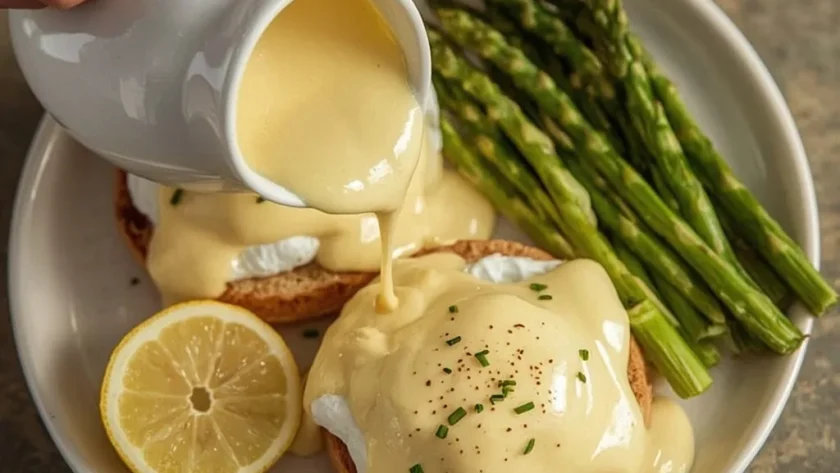
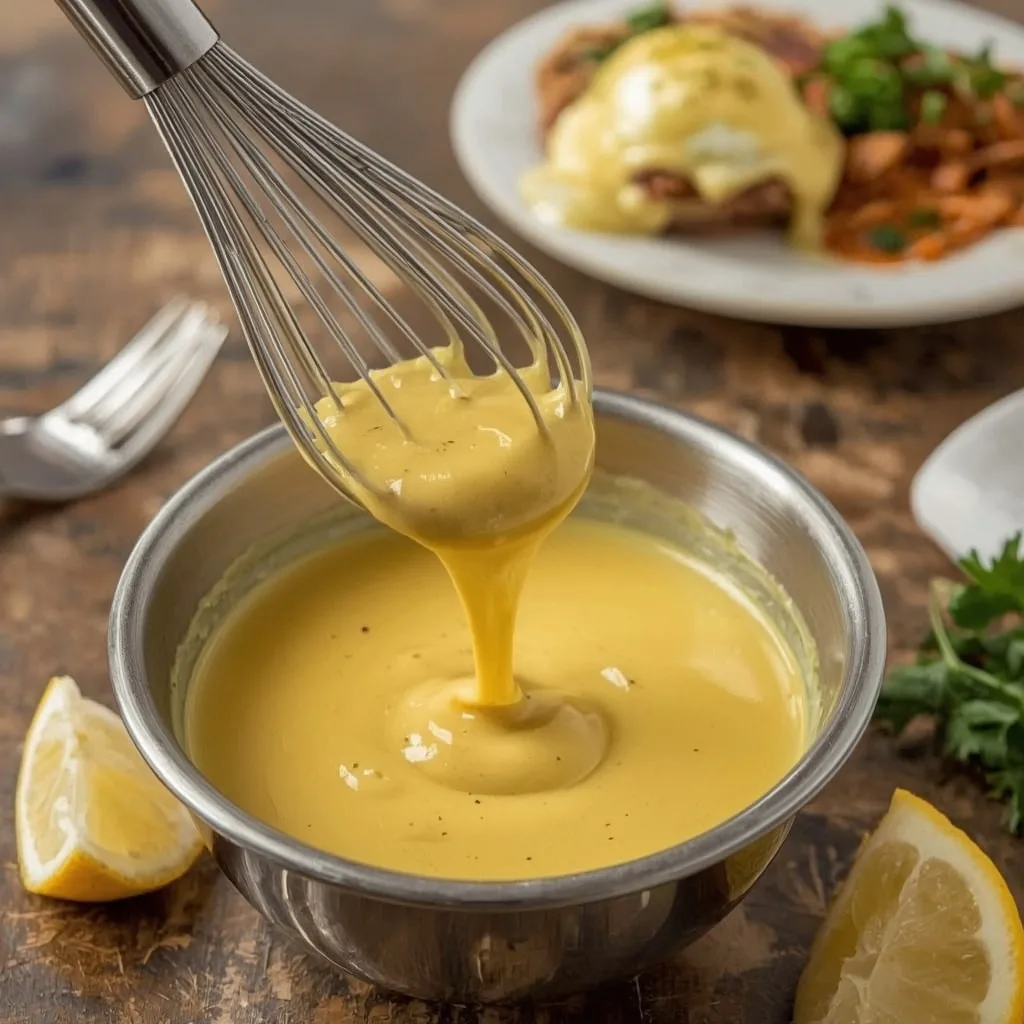
This Gordon Ramsay hollandaise sauce is rich, glossy and pale gold, with a velvety texture that coats the back of a spoon and a bright lemon finish that cuts straight through the butter. A sharp vinegar and peppercorn reduction adds a subtle tang underneath, and a pinch of cayenne gives the gentlest warmth. It is the sauce that turns poached eggs into eggs Benedict, and it is just as good spooned over asparagus, salmon or steak.
From start to finish it takes about 15 minutes: 5 minutes of prep and 10 minutes at the stove. The technique is intermediate, and the step worth slowing down for is cooking the yolks over barely simmering water until they thicken and reach a safe temperature without scrambling. Make it for a weekend brunch, an Easter or Mother’s Day spread, or a special steak dinner at home.
What is Gordon Ramsay Hollandaise Sauce?
Hollandaise is one of the classic French mother sauces: an emulsion of warm egg yolks and melted butter, sharpened with lemon juice. The yolks are whisked over a gentle water bath until thick and foamy, then warm butter is drizzled in slowly so the fat breaks into tiny droplets suspended in the yolk. That emulsion is what gives the sauce its silky body. In this version, inspired by Gordon Ramsay’s style of cooking, a quick reduction of white vinegar, shallot and peppercorns adds depth. Hollandaise is usually served warm over eggs, vegetables and fish.
Reasons to Try Gordon Ramsay Hollandaise Sauce
- Restaurant brunch at home — A smooth, homemade sauce makes eggs Benedict taste like something from a hotel brunch menu.
- Fast once you know it — The whole process takes about 10 minutes at the stove, so it fits easily into a weekend morning.
- Bright balance — Fresh lemon and a tangy reduction keep the richness of the butter from feeling heavy.
- Versatile pairing — Asparagus, salmon, crab cakes and steak all benefit from a spoonful of this sauce.
- Pantry ingredients — Eggs, butter and lemon are probably in your kitchen right now.
- Safe and steady method — Cooking the yolks to 160°F (71°C) over a water bath makes the sauce food-safe and more stable.
Ingredients Needed to Make Gordon Ramsay Hollandaise Sauce
Good butter and fresh eggs do most of the work here, so buy the best you can.
For the Reduction
- White vinegar (2 tbsp) — Gives a clean, sharp tang that balances the butter; apple cider vinegar works too.
- Water (2 tbsp) — Softens the vinegar so the reduction tastes bright rather than harsh.
- Shallot (1 small, finely chopped) — Adds a mild, sweet onion note that sits quietly in the background.
- Black peppercorns (4, lightly crushed) — Infuse gentle spice without leaving dark specks in the finished sauce.
- Bay leaf (1 small) — Brings a subtle herbal depth to the reduction.
For the Sauce
- Egg yolks (3 large) — Form the base of the emulsion; room-temperature yolks thicken more evenly.
- Unsalted butter (1/2 cup, melted and warm) — Creates the rich body; clarifying it first gives an even more stable sauce.
- Fresh lemon juice (1 tbsp, plus more to taste) — Lifts the sauce and keeps it from tasting flat.
Seasoning
- Fine sea salt (1/4 tsp) — Dissolves quickly so you can season the sauce evenly.
- Cayenne pepper (a pinch) — Adds a whisper of heat and a warm color without making the sauce spicy.
- Warm water (1 to 2 tsp, as needed) — Loosens the sauce if it becomes too thick while you hold it.
Equipment Needed
- Small saucepan — Reduces the vinegar mixture and then holds the simmering water for the water bath.
- Heatproof glass or steel bowl — Sits snugly over the pan so the yolks cook gently from the steam.
- Balloon whisk — Whips air into the yolks and keeps the emulsion moving as the butter goes in.
- Instant-read thermometer — Confirms the yolks reach 160°F (71°C) before you add the butter.
- Fine-mesh strainer — Removes the shallot and peppercorns from the reduction for a perfectly smooth sauce.
Instructions to Prepare Gordon Ramsay Hollandaise Sauce
- Make the reduction — Simmer the vinegar, water, shallot, peppercorns and bay leaf in a small saucepan for 3 to 4 minutes until reduced to about 1 tablespoon. Strain into the heatproof bowl and let it cool for 1 minute.
- Melt the butter — Warm the butter in the microwave or a small pan until fully melted and hot but not browned. For extra stability, spoon off the white foam and leave the milky solids behind.
- Set up the water bath — Fill the saucepan with 1 inch of water and bring it to a bare simmer. The bowl should sit over the pan without touching the water.
- Whisk the yolks — Add the egg yolks and lemon juice to the reduction in the bowl. Place over the simmering water and whisk constantly for 3 to 4 minutes until thick, pale and the whisk leaves ribbons, and the yolks reach 160°F (71°C).
- Stream in the butter — Take the bowl off the heat and set it on a damp towel. Drizzle in the warm butter a teaspoon at a time at first, whisking constantly, then in a thin stream once the sauce starts to thicken.
- Season to taste — Whisk in the salt, cayenne and extra lemon juice. If the sauce feels too thick, loosen it with a teaspoon of warm water.
- Serve warm — Spoon over eggs, vegetables or fish right away, or hold the bowl over warm, not simmering, water for up to 30 minutes, whisking now and then.
What Goes Well With Gordon Ramsay Hollandaise Sauce Recipe
Hollandaise loves anything that benefits from a little richness and acidity.
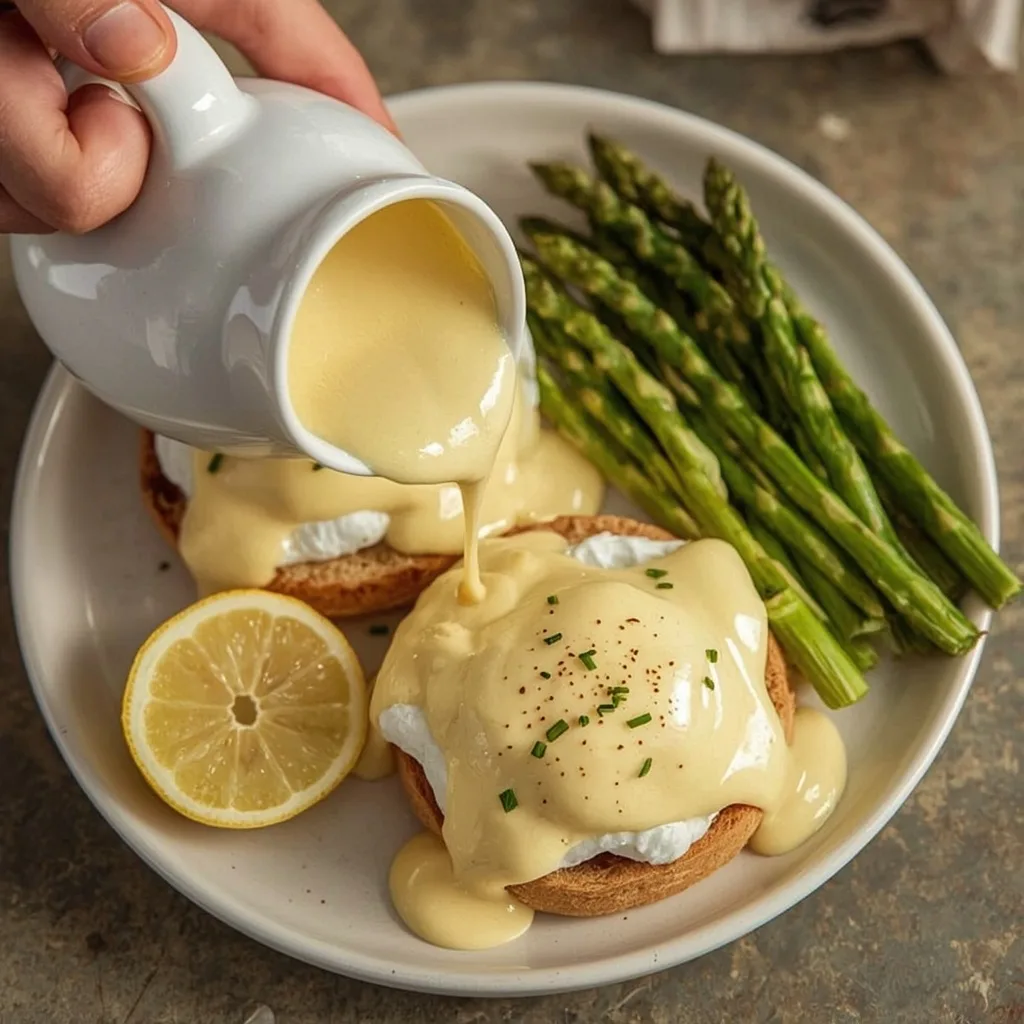
- Eggs Benedict — Poached eggs and toasted English muffins are the classic match, and the sauce ties the whole stack together.
- Roasted asparagus — Charred spears bring a grassy freshness that balances the butter beautifully.
- Pan-seared salmon — Crisp-skinned fish and lemony sauce are a proven combination that feels special but cooks quickly.
- Crusty sourdough toast — Mopping up the last of the sauce with toasted bread is half the pleasure.
- Fresh orange juice — Cold citrus juice refreshes the palate between rich, buttery bites.
- Lemon posset — Light and tangy, this dessert echoes the lemon in the sauce and finishes the meal on a bright note.
Key Tips for Making Gordon Ramsay Hollandaise Sauce Recipe
- Gentle heat only — Keep the water at a bare simmer; if the bowl gets too hot to touch, lift it off for a few seconds while you whisk.
- Temperature check — Pull the yolks off the heat once they hit 160°F (71°C), since much higher and they begin to scramble.
- Slow start with the butter — The first few spoonfuls build the emulsion, so add them drop by drop before switching to a steady stream.
- Rescue a split sauce — Whisk a tablespoon of warm water in a clean bowl, then slowly whisk the broken sauce into it until it comes back together.
- Damp towel trick — Setting the bowl on a twisted damp towel stops it from spinning so you can pour and whisk at the same time.
- Warm butter, not hot — Butter around 140°F (60°C) blends smoothly, while sizzling butter can cook the yolks too fast.
- Season at the end — Lemon and salt taste different once the butter is in, so adjust only after the sauce is finished.
Creative Variations of Gordon Ramsay Hollandaise Sauce Recipe
- Béarnaise-style herb sauce — Add chopped tarragon and chervil to the reduction and stir fresh tarragon into the finished sauce for steak.
- Blood orange maltaise — Replace half the lemon juice with blood orange juice and a little zest for a sweet, citrusy sauce with asparagus.
- Chipotle kick — Whisk in 1 teaspoon of adobo sauce for smoky heat that suits breakfast burritos and grilled corn.
- Mustard hollandaise — Stir in 1 teaspoon of Dijon mustard for extra tang and a more stable emulsion.
- Blender method — Blend the yolks, reduction and lemon, stream in hot butter, then pour into a bowl over simmering water and whisk until it reaches 160°F (71°C).
Storage Guidelines for Gordon Ramsay Hollandaise Sauce Recipe
- Best fresh — Hollandaise is at its silkiest within 30 minutes of making it, so plan to serve it right away.
- Refrigerator life — Leftovers keep in an airtight container for up to 2 days.
- Cooling quickly — Transfer leftover sauce to a shallow container and refrigerate within 2 hours of cooking.
- No freezing — Freezing breaks the emulsion and leaves the sauce greasy and grainy once thawed.
Reheating Tips for Gordon Ramsay Hollandaise Sauce Recipe
Chilled hollandaise sets firm, so it needs gentle heat and steady whisking to come back.
- Water bath — Whisk the cold sauce in a heatproof bowl over barely simmering water, adding a teaspoon of warm water at a time, until smooth and steaming and it reaches 165°F (74°C).
- Microwave in bursts — Heat at 30 percent power in 10-second bursts, whisking well between each, until hot throughout.
- Fixing grainy sauce — If it separates while warming, whisk it slowly into a spoonful of warm water in a clean bowl to re-emulsify.
Nutrition Value (per serving)
Based on 1 serving out of 4 total servings.
- Calories — 240
- Protein — 2g
- Fat — 26g
- Saturated Fat — 15g
- Carbohydrates — 1g
- Fiber — 0g
- Sugar — 0g
- Sodium — 150mg
- Cholesterol — 195mg
Gordon Ramsay Hollandaise Sauce
A silky, lemony hollandaise built on a quick vinegar and peppercorn reduction and finished with warm butter. The yolks are cooked gently to a safe 160°F (71°C) for a stable, glossy sauce.
- Prep Time: 5 minutes
- Cook Time: 10 minutes
- Total Time: 15 minutes
- Yield: 4 1x
- Category: Sauce
- Method: Stovetop
- Cuisine: French
Ingredients
For the Reduction
- 2 tablespoons white vinegar
- 2 tablespoons water
- 1 small shallot, finely chopped
- 4 black peppercorns, lightly crushed
- 1 small bay leaf
For the Sauce
- 3 large egg yolks, at room temperature
- 1/2 cup unsalted butter, melted and warm
- 1 tablespoon fresh lemon juice, plus more to taste
Seasoning
- 1/4 teaspoon fine sea salt
- Pinch of cayenne pepper
- 1 to 2 teaspoons warm water, as needed
Instructions
- Simmer the vinegar, water, shallot, peppercorns and bay leaf in a small saucepan for 3 to 4 minutes until reduced to about 1 tablespoon. Strain into a heatproof bowl and cool for 1 minute.
- Melt the butter until hot but not browned, skimming off the foam if you like.
- Rinse the saucepan, add 1 inch of water and bring to a bare simmer so the bowl can sit over it without touching the water.
- Add the egg yolks and lemon juice to the reduction. Set the bowl over the simmering water and whisk constantly for 3 to 4 minutes until thick and pale and the yolks reach 160°F (71°C).
- Remove the bowl from the heat and set it on a damp towel. Whisk in the warm butter a teaspoon at a time, then in a thin stream once the sauce thickens.
- Whisk in the salt, cayenne and extra lemon juice to taste, loosening with warm water if needed.
- Serve immediately, or hold over warm water for up to 30 minutes, whisking occasionally.
Notes
Refrigerate leftovers in an airtight container for up to 2 days; do not freeze. Rewarm slowly over barely simmering water, whisking in a little warm water, until smooth and heated to 165°F (74°C).
Nutrition
- Calories: 240
- Sugar: 0g
- Sodium: 150mg
- Fat: 26g
- Saturated Fat: 15g
- Unsaturated Fat: 11g
- Carbohydrates: 1g
- Fiber: 0g
- Protein: 2g
- Cholesterol: 195mg
Keywords: Gordon Ramsay hollandaise sauce, hollandaise sauce recipe, homemade hollandaise, eggs Benedict sauce, easy hollandaise, classic French sauce, lemon butter sauce, hollandaise for asparagus, brunch sauce, foolproof hollandaise